A morning routine often begins with the rhythmic click of a car door and the heavy scent of oil and rubber in a service bay. For many Texans, the trip to a local repair shop is a necessary interruption to a busy week. However, when you arrive with a vehicle that shows signs of wear, the conversation often shifts from mechanical necessity to aesthetic preference. Managing this distinction requires a careful eye and a clear set of observations.
Observing the Surface
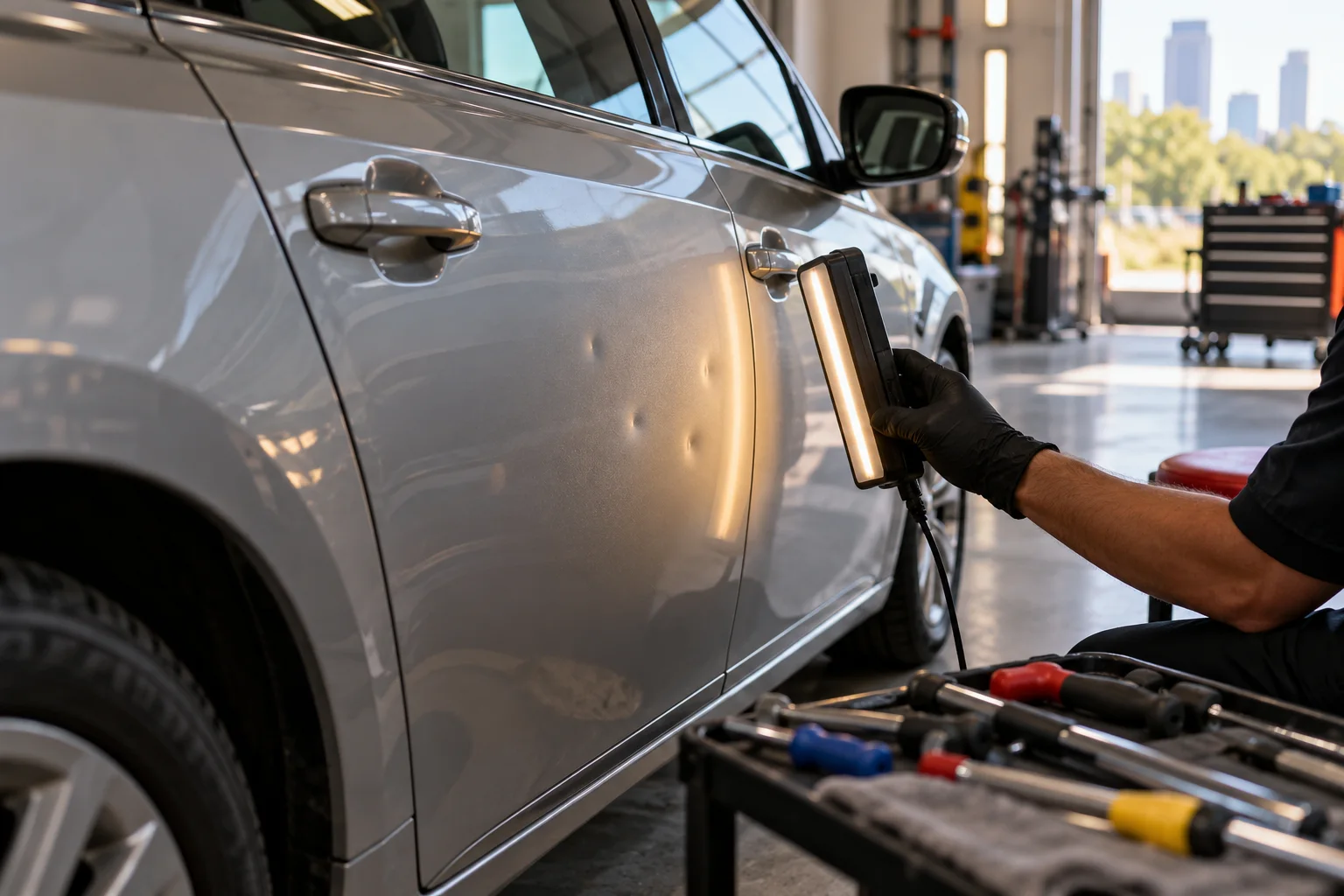
It is easy to walk up to a vehicle and simply state that it looks "worn." To make the most of your time at the shop, take a moment to look closer at the specific character of the damage. Is the imperfection a sharp scratch that has reached the base layer, or is it a dulling of the shine caused by environmental exposure? Does the dent disrupt the flow of the body line, or is it a minor indentation that sits flush with the surrounding metal?
Noting these details helps you communicate exactly what you see. Instead of a general request for a "fix," you can describe the specific visual disruptions you have observed. This allows the professional to understand your baseline for what constitutes a successful result.
The Aesthetic Tradeoff
A significant tension exists between a desire for perfection and the practicalities of daily transport. For some, a vehicle is a curated reflection of personal style; for others, it is a tool for navigating highways and school zones. This creates a meaningful tradeoff: the pursuit of a flawless, showroom-quality finish versus the utility of a quick, functional restoration.
For example, if you have a sedan with a series of light scuffs along the bumper, you might find yourself weighing two different paths. You could aim for a complete resurfacing to ensure the color matches perfectly under direct sunlight, or you might opt for a more targeted approach that addresses only the most visible marks. One path prioritizes the visual integrity of the machine, while the other prioritizes the efficiency of the repair process.
Defining the Scope
Once you have identified your visual goals, the next step is to bridge the gap between your preference and the shop's capabilities. Rather than attempting to suggest how the work should be performed, focus your energy on the intended outcome. The most effective way to manage expectations is to ask questions that define the boundaries of the project.
Ask the service advisor how the proposed work addresses the specific areas of damage you pointed out. You might ask what the expected visual result will be in relation to the rest of the vehicle's current condition. Furthermore, ask how the service will affect your ability to use the vehicle during the process and what the timeline looks like for a completed appearance. By focusing on the scope of the work and the final look, you ensure that your visual standards are aligned with the practical reality of the shop's schedule.